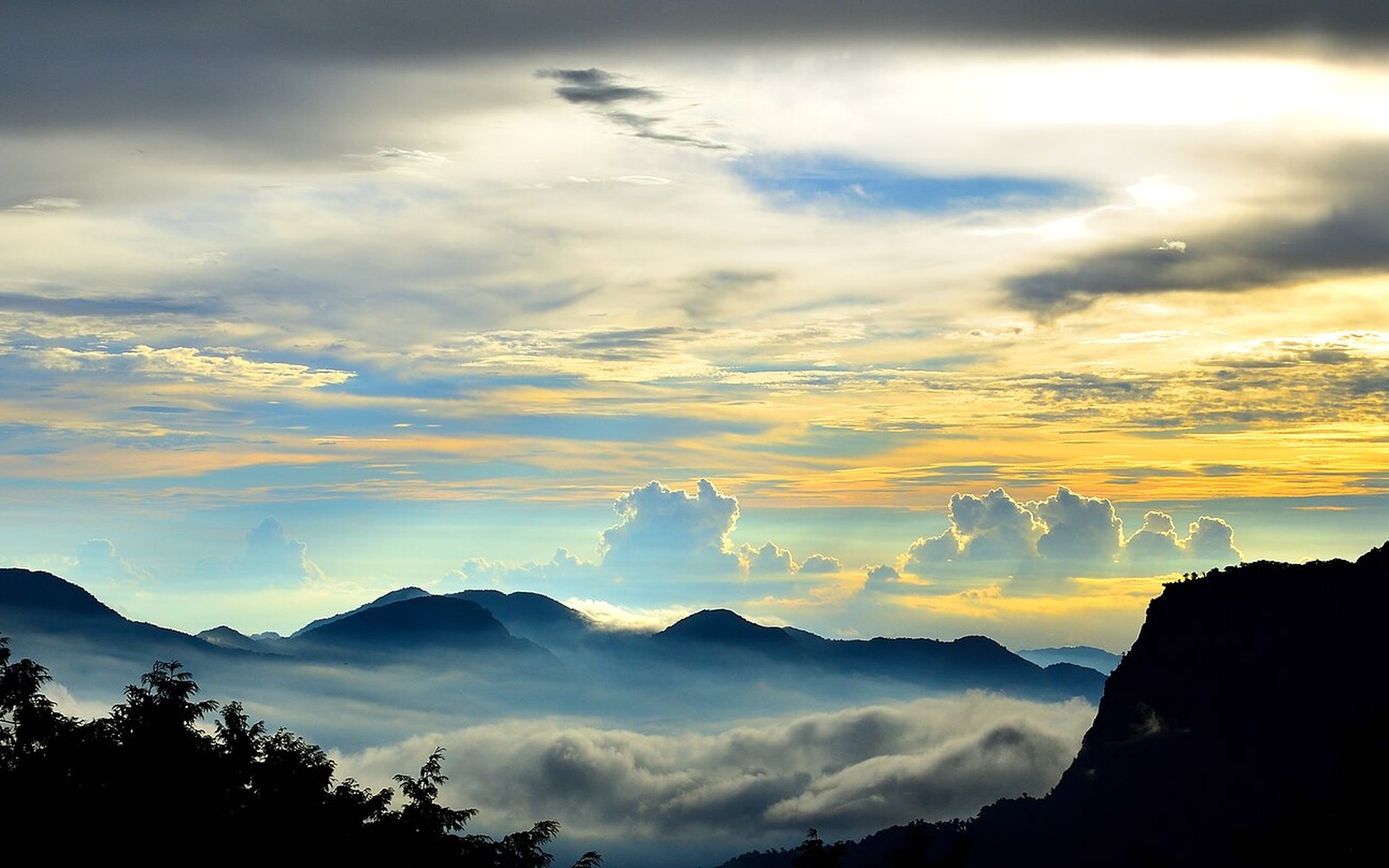
Tea grown above a thousand metres
Altitude as an ingredient
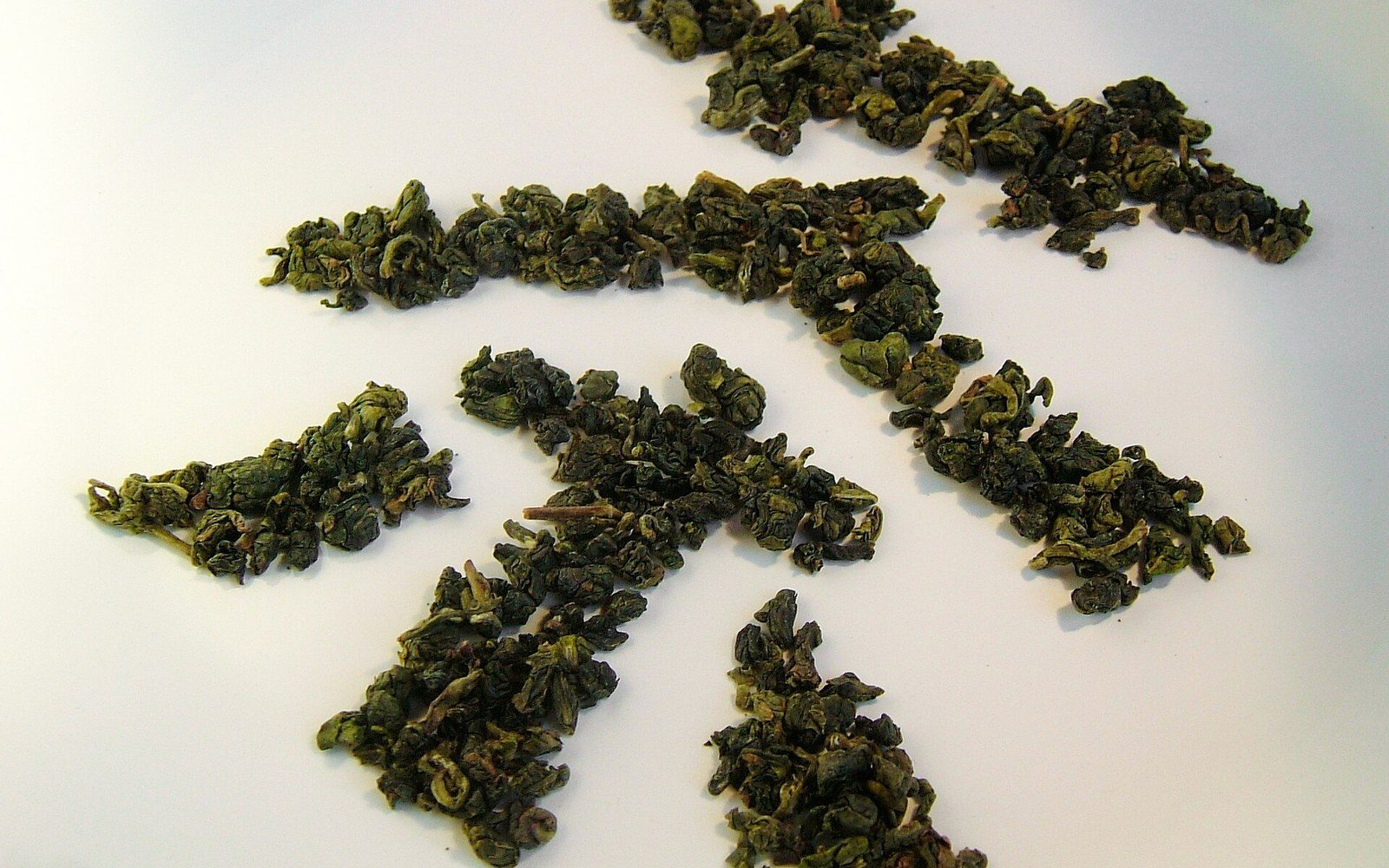
The phrase gaoshan cha — high-mountain tea — is not a brand or a vague aspiration. In Taiwan it refers to oolong grown above roughly a thousand metres elevation, where lower temperatures slow the growth of the tea plant and the daily cloud belt reduces the hours of direct sun. Both forces matter. Slower growth means smaller, denser leaf cells and a higher ratio of amino acids to catechins; diffused light, rather than full sun, suppresses some of the bitter compounds that accumulate under heat stress. The cup that results — floral, creamy, with a long finish — cannot be exactly replicated at lower elevations, and the growing regions where it happens are few and named.
Alishan is among the most recognised of those names. The area sits in Chiayi County, in the central-southern highlands of Taiwan, with the principal tea gardens concentrated between about 1,000 and 1,600 metres on slopes that face northeast or northwest to moderate the afternoon sun. The mountain range is not a single peak but a series of ridges, and the tea belt occupies a particular band within it — high enough for the temperature drop that slows growth, low enough to remain cultivable without extraordinary effort. Villages such as Zhushan, historically associated with the movement of goods through the highlands, and Fenqihu lower on the railway line, mark the human geography that the tea economy grew alongside.
Oxidation stopped on purpose
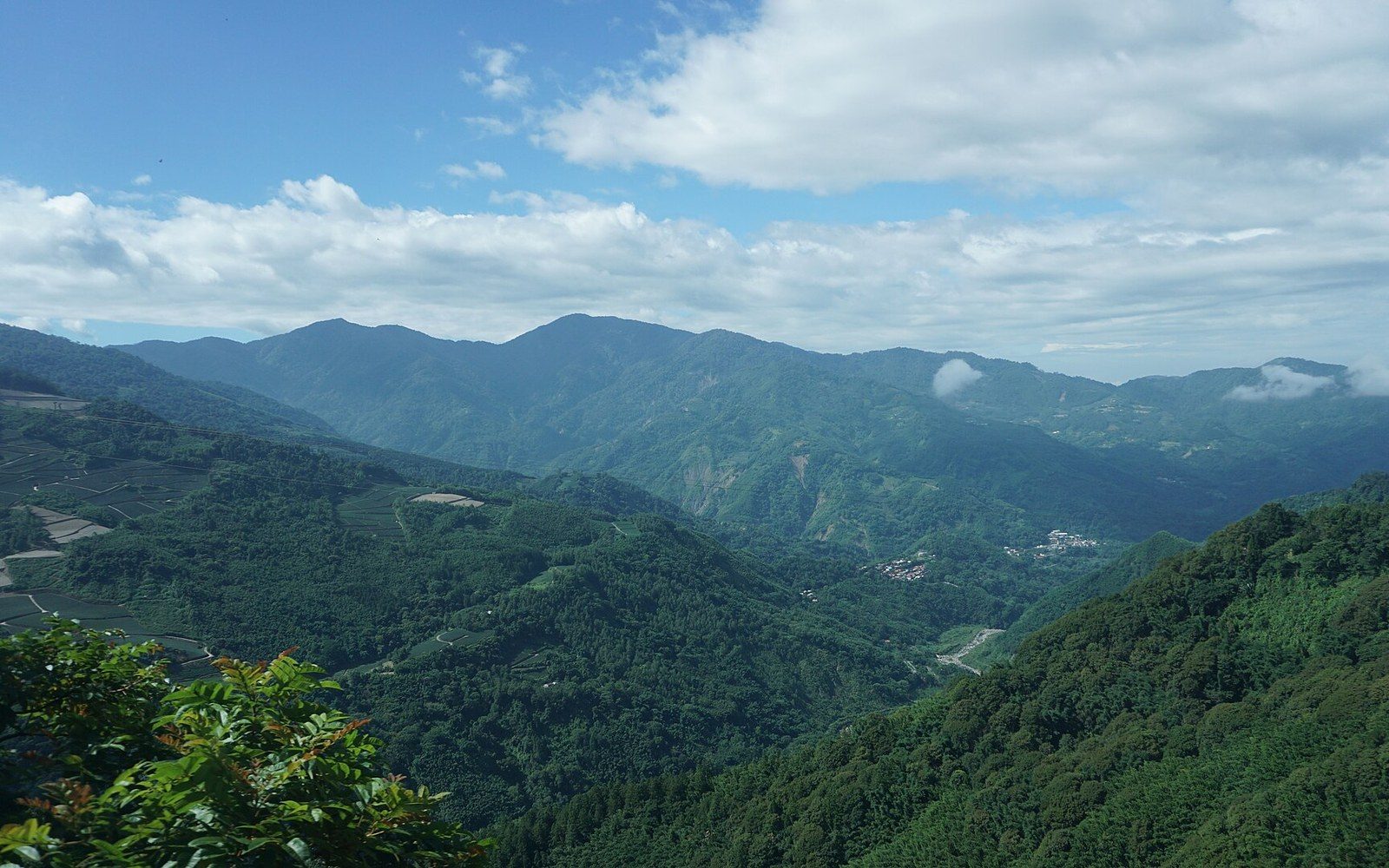
Oolong sits between green tea and black tea on the spectrum of oxidation, and that position is the result of a deliberate interruption. Once tea leaves are picked, enzymatic oxidation begins: the enzymes in the broken cells react with oxygen and begin converting colourless compounds into the darker, more astringent molecules that define a fully oxidised black tea. Green tea is made by halting this process almost immediately, through heat — pan-firing or steaming — so the leaf stays green and the flavours stay fresh and vegetal. Black tea goes to near-complete oxidation before heat stops it.
Oolong occupies the middle ground because the maker stops oxidation partway through. The precise point depends on style: the high-mountain oolongs of Alishan are typically lightly to moderately oxidised, somewhere in a range that preserves the floral and buttery aromatic compounds while allowing some of the green, grassy notes to soften. The process involves withering the freshly picked leaf, then a period of repeated tumbling or shaking in bamboo drums or rotating cylinders to bruise the leaf edges and trigger controlled oxidation at those margins, leaving the cell interior less affected. The maker monitors colour, scent and temperature and applies heat — usually in a large rotating drum or a specialised gas-fired oven — when the oxidation level looks right. After that, the leaf is rolled, dried and sorted.
What altitude does to this process is slow it and make it more legible. In cool mountain air, oxidation proceeds at a more measured pace; the window during which the aromatics peak is wider, and the risk of runaway oxidation is lower than in the hot, humid conditions of lowland production. This is part of why the same cultivar, processed identically, tastes different at altitude: the rate of the reaction shapes the flavour, not just its end point.
The cultivar question
Most Alishan high-mountain oolong is made from Qingxin ↗ oolong, a cultivar developed in Taiwan and sometimes romanised as Chin-shin. It is known for its sensitivity to growing conditions, which is partly why altitude shows through so clearly in the cup: the variety responds to the environment rather than masking it. Qingxin is not a high-yielding plant, and it is susceptible to a number of pests and diseases that are less problematic at altitude than in warmer growing areas — one practical reason why the high-mountain growing zones are often cited by organic and low-input producers as more viable for reduced-spray management.
The tea plant itself, Camellia sinensis, is a subtropical evergreen that has been grown at high elevation in Taiwan since at least the mid-nineteenth century, with commercial cultivation in the Alishan area expanding through the twentieth century as road access improved and the reputation of the product grew. The cultivar selection, harvest timing and processing that now define the regional style were not arrived at overnight; they represent accumulated practice over many decades.
What the certificate adds
Growing at altitude does not by itself guarantee any particular production method. High-mountain oolong, like any agricultural product, can be grown with synthetic fertilisers and pesticides — and in conventional production, it often is. An organic certificate changes that calculus: it requires that the land was managed without synthetic inputs for a minimum of three years before the first certified harvest, that only inputs from the permitted substances list were used throughout, and that the whole chain from field to sealed bag was audited for traceability.
For tea specifically, the supply chain audit matters more than it might for a bulk commodity. A single package of finished oolong may contain leaf from several harvests within a certified plot, or in lower-grade blends, from several plots. Mass balance — checking that the volume of certified leaf going in is consistent with the volume of certified product going out — is the auditor's tool for catching undisclosed mixing. The annual inspection covers field records, purchase receipts for all inputs, and harvest logs, and may include residue testing to verify that the documentary record matches what the chemistry shows.
In Taiwan, the relevant national framework is the Organic Agriculture Act, enacted in 2018, which consolidated earlier piecemeal rules under a single law covering both domestic production and organic imports. Certification is issued by accredited bodies rather than by the government directly — a structure common to most major organic systems worldwide and documented in frameworks such as the IFOAM family of standards, which allow national programmes to align with internationally recognised norms without requiring identical rules.
The altitude, the cloud, the cultivar, the careful interruption of oxidation: these are the conditions that make the tea. The certificate is a separate claim, about how the land was managed and whether the paperwork holds. Both can be true at once; neither guarantees the other. Reading the label means knowing which question each answer belongs to.