Somebody has to sign it
Certification is issued by accredited bodies rather than by governments directly, and IFOAM sits above them as an umbrella rather than as a regulator.

The certificate on the packet comes from a private body, not a government agency — and understanding who accredits the accreditors matters more than the logo itself.
The chain of authority
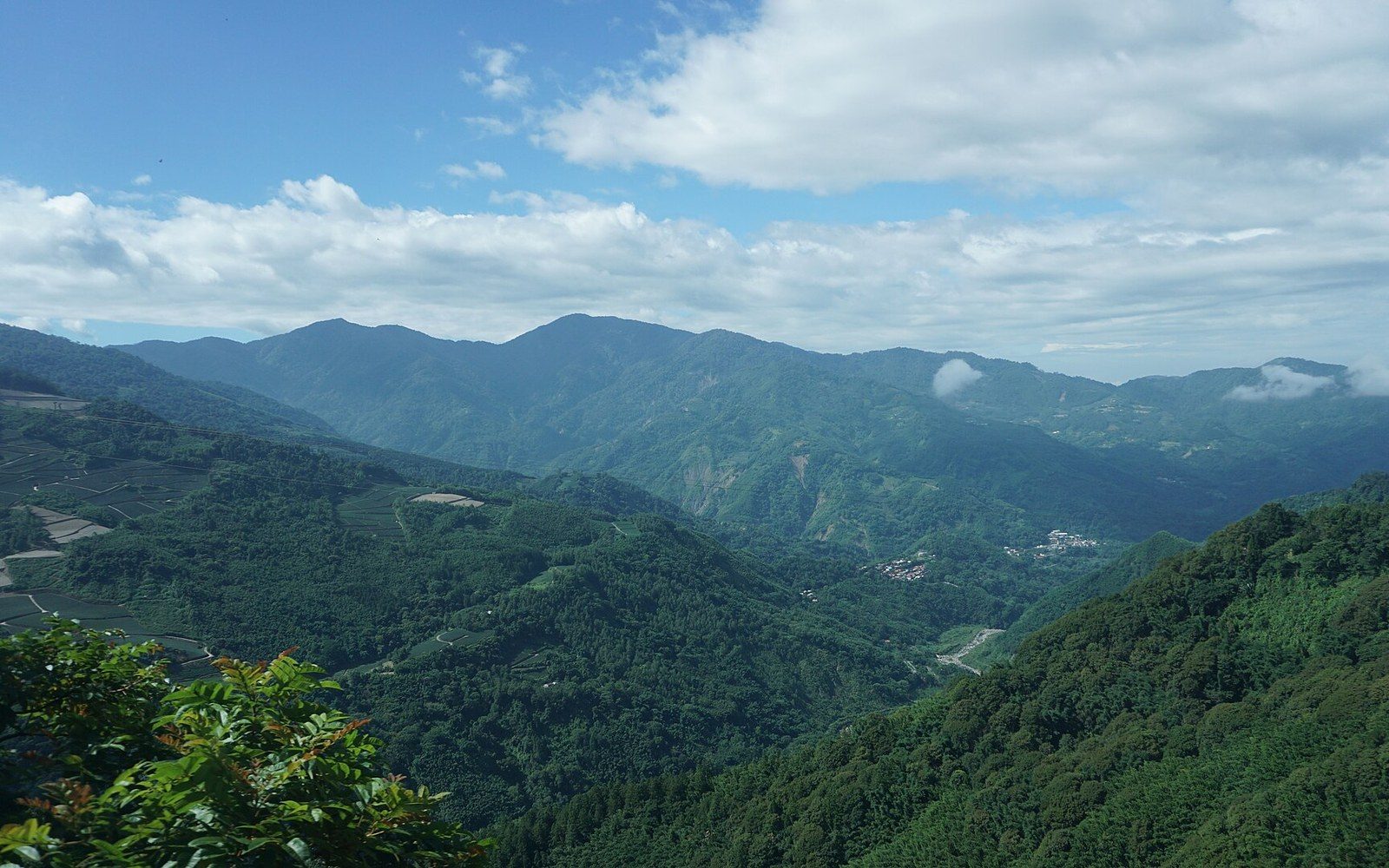
When a tea garden in the Alishan National Scenic Area sells its harvest as organic, the certificate it holds was not issued by the Taiwanese government, nor by the European Commission, nor by the USDA National Organic Program. It was issued by a certification body — a private or semi-private organisation that has been formally accredited to operate under one or more of those regulatory frameworks. The government sets the rulebook; a third party does the checking; the farmer holds the result. Each link in that chain has a defined role, and the certificate is only as trustworthy as the weakest of them.
IFOAM — Organics International, founded in 1972 and headquartered in Bonn — sits above the certification bodies as an umbrella federation rather than as a regulator with legal force. IFOAM's Organic Guarantee System sets a global benchmark for what an organic standard ought to contain, and it accredits certification bodies against that benchmark. A body carrying IFOAM accreditation has demonstrated that its standard is broadly equivalent to the international norm. What IFOAM cannot do is override national law: if the EU organic regulation or Taiwan's Organic Agriculture Act requires something that IFOAM does not, the national requirement wins inside that market.
What a certification body actually does
The certification body's job is auditing, not farming. It receives an application, reviews the applicant's farm plan and input records, dispatches an inspector for an on-site visit, and — if everything holds — issues a certificate valid for one year. The inspector is looking at whether the three-year conversion period has been completed, whether the inputs used appear on the permitted substance list, whether buffer zones are in place against neighbouring land, and whether the traceability records allow a specific batch of product to be followed back to a specific field on a specific date. After that, residue testing may be carried out as a separate, chemistry-based check on whether the paperwork matches the crop.
The certification body is itself subject to oversight. In the EU, national accreditation bodies authorise certification bodies to operate under Commission Regulation (EU) 2018/848 ↗, and the Commission maintains a public register of approved control bodies for imports from third countries, including Taiwan. In the United States, the USDA National Organic Program accredits certifiers directly. A certifier operating across multiple markets may need separate accreditation for each — which is why some Alishan tea producers hold more than one certificate, one for domestic sale under Taiwan's standards and another for export to the EU or North American markets.

Who checks the checker
That layered structure is designed to prevent conflicts of interest, but it is not self-executing. A certification body is paid by the operators it certifies, which creates a structural tension that the accreditation system is supposed to resolve by holding certifiers to documented procedures and periodic external audits. IFOAM's accreditation process requires certifiers to demonstrate impartiality mechanisms — separate decision-making from inspection, for instance — and to log deviations and complaints. Where a certifier is found to have been lax, the national accreditation body can suspend or withdraw its authorisation. The 2008 case in which the EU suspended several Chinese organic certifiers after contamination findings illustrates both how the mechanism works and why its absence would leave the label meaningless.
Demeter, the certification system for biodynamic agriculture, operates a parallel structure with its own private standard sitting above national organic requirements — producers must first meet the baseline organic rules, then satisfy additional Demeter criteria. Fairtrade International runs a comparable model, layering labour and trade standards onto whatever agricultural certification applies. The Alishan growing region, where small-holder tea gardens are the norm and export routes reach into Europe and North America, is exactly the kind of context where a producer may carry several of these overlapping certificates simultaneously.
The logo on a packet of high-mountain oolong is, in the end, a shorthand for a documented chain of decisions — an inspection file, a signed report, an accreditation record — that any buyer is entitled to ask to see.