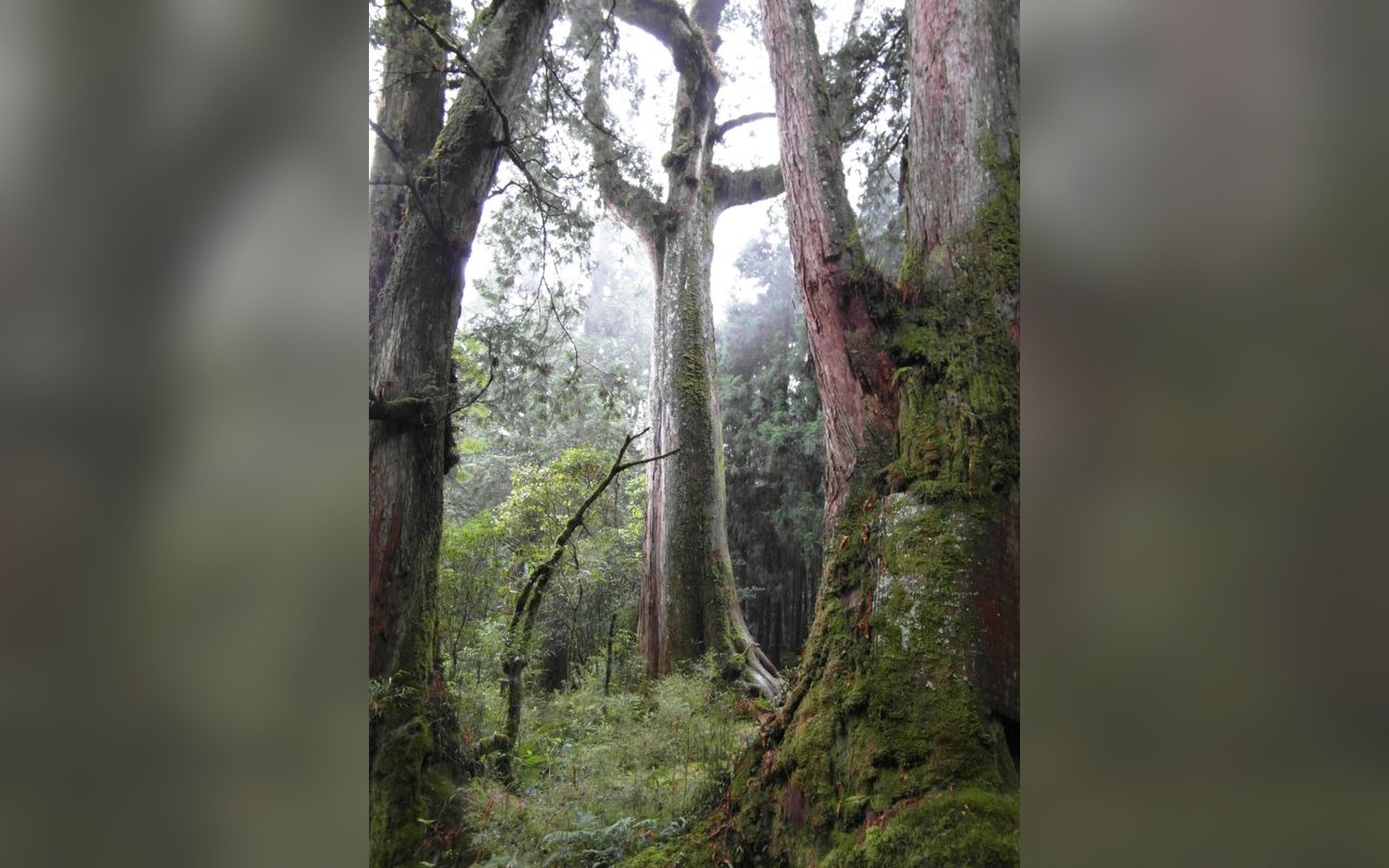
A halfway town that stayed
Fenqihu grew as a service stop on the line and survived the end of logging as a waypoint rather than as a destination.
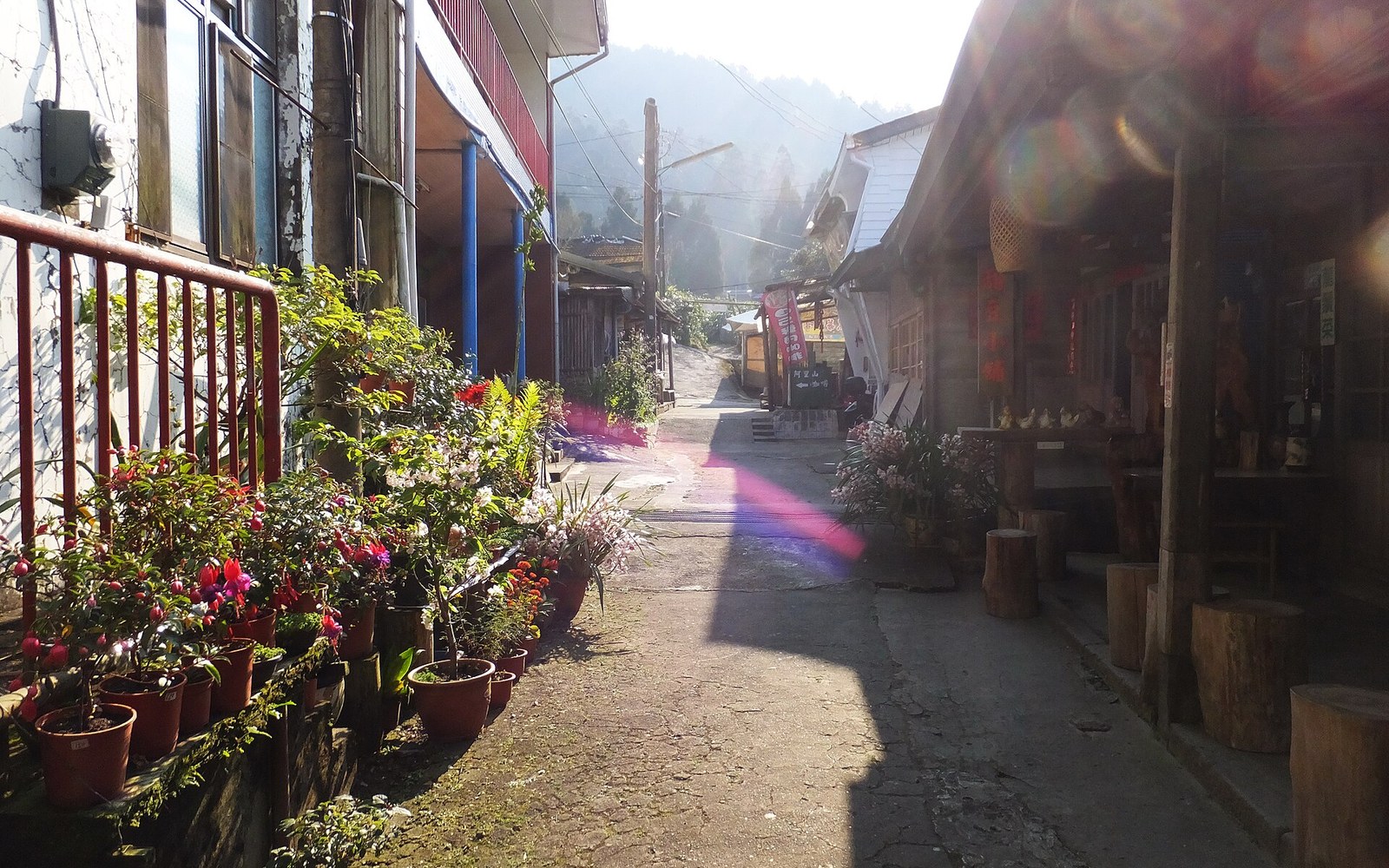
Fenqihu was built to feed loggers on their way up the mountain. The logging stopped; the town did not.
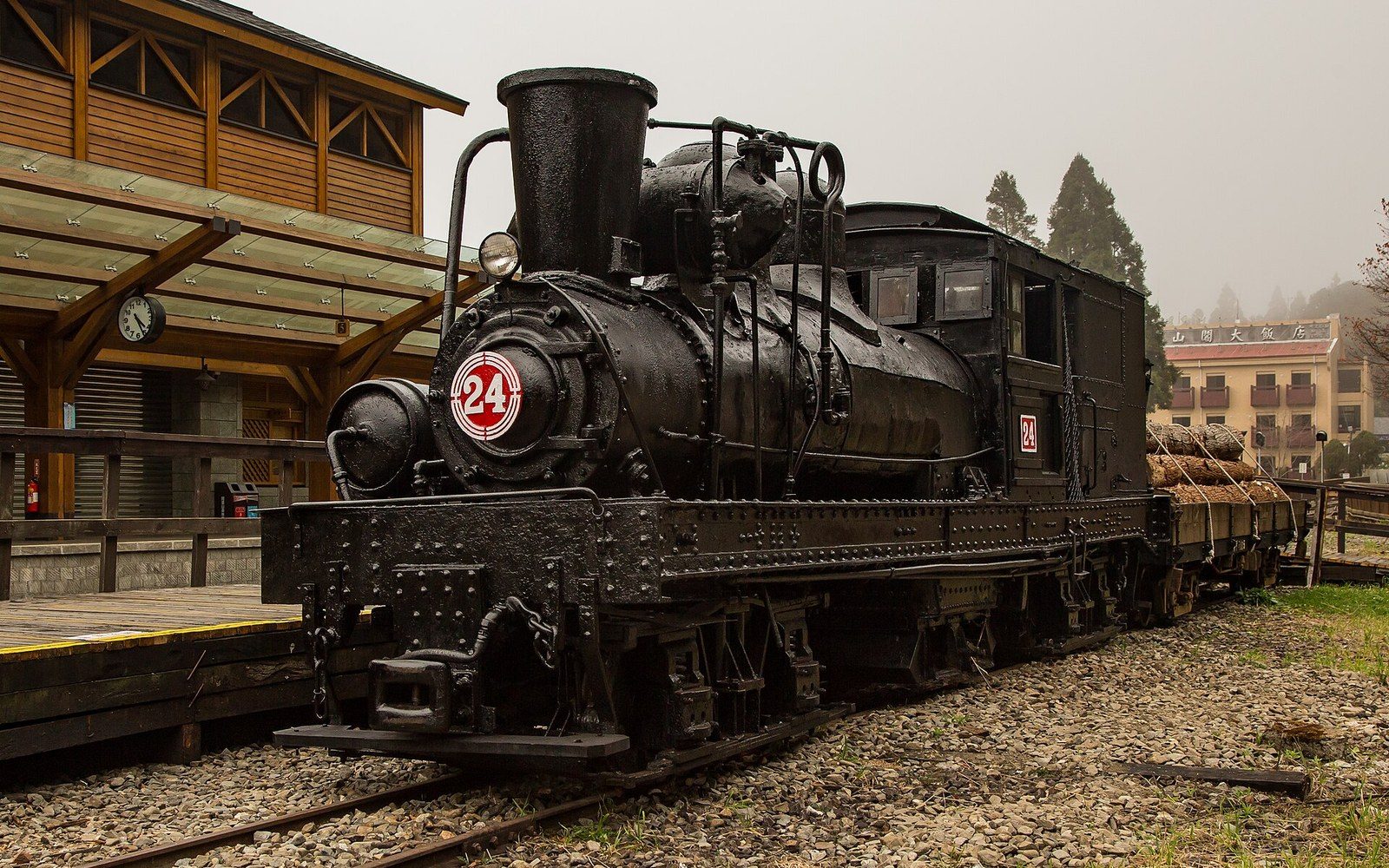
The logic of the stop
The Alishan Forest Railway climbs roughly 2,200 metres from the plains at Chiayi City to the high forest, and it does not climb gently. The line built from 1912 for timber extraction needed a working midpoint — a place to take on water, check brakes, change crew and feed the men hauling cypress out of the mountains above Zhushan. Fenqihu sat at around 1,400 metres, close enough to the summit run to matter, low enough to sustain a settlement. A depot, a station, a row of wooden shophouses: the town grew precisely because the railway needed it to.
That functional logic is easy to overlook now, when Fenqihu is marketed as a scenic stop. The shophouses along its single main lane are real, not reconstructed — the oldest date to the Japanese colonial period, when the Forestry Bureau of the Government-General of Taiwan administered both the railway and the timber concessions it served. The station building itself, a modest wooden structure that has been repaired rather than replaced, is a material record of what the stop was actually for.
After the timber
Industrial logging on the cedars and cypress of Alishan wound down through the latter half of the twentieth century, and the economic premise of Fenqihu's existence dissolved with it. A town built around freight and workers' meals had two options: find another reason to exist, or empty out. Fenqihu found the other reason, and the transition was less dramatic than it might sound, because the railway was already carrying passengers alongside freight. Tourism to Alishan had been growing since at least the 1930s, and Fenqihu was on the route.
What changed was the balance of traffic rather than its direction. Freight fell; leisure travel rose. The bento lunch box — the Fenqihu lunchbox, packed in a wooden container and sold on the platform — became the town's best-known product, a piece of railway catering culture that outlasted the logs it was originally feeding workers to retrieve. Taiwan's Council of Agriculture and Chiayi County's tourism infrastructure both point to Fenqihu as a heritage railway settlement, not an industrial one, though the heritage is inseparable from the industry that created it.
The Alishan National Scenic Area ↗, administered under the Tourism Administration, formally incorporates Fenqihu as one of its recognised sites. That administrative recognition matters: it is part of why the shophouse lane survived rather than being cleared and rebuilt. Preservation was not guaranteed. The 1999 Jiji earthquake caused damage across Chiayi County, and a subsequent typhoon damaged sections of the forest railway itself, suspending service on parts of the line for years. Fenqihu persisted through both.

What a waypoint holds
The town's value now is precisely its in-between quality. It is not the terminus at Alishan, with the famous sunrise platform and the cherry trees. It is not the plains city of Chiayi. It sits at altitude in the cloud belt, where the daily fog that shapes high-mountain oolong cultivation also shapes the light and the temperature of the town, and where the forest presses close enough to the lane that the distinction between settlement and woodland is not always obvious.
That ambiguity is functional history rather than atmosphere. Fenqihu exists at this altitude because the railway needed a stop here; it still exists because the stop became a place before the railway's original purpose ended. The wooden station, the platform lunch boxes, the shophouses on their stone foundations: none of it was planned as heritage. It became heritage by staying.