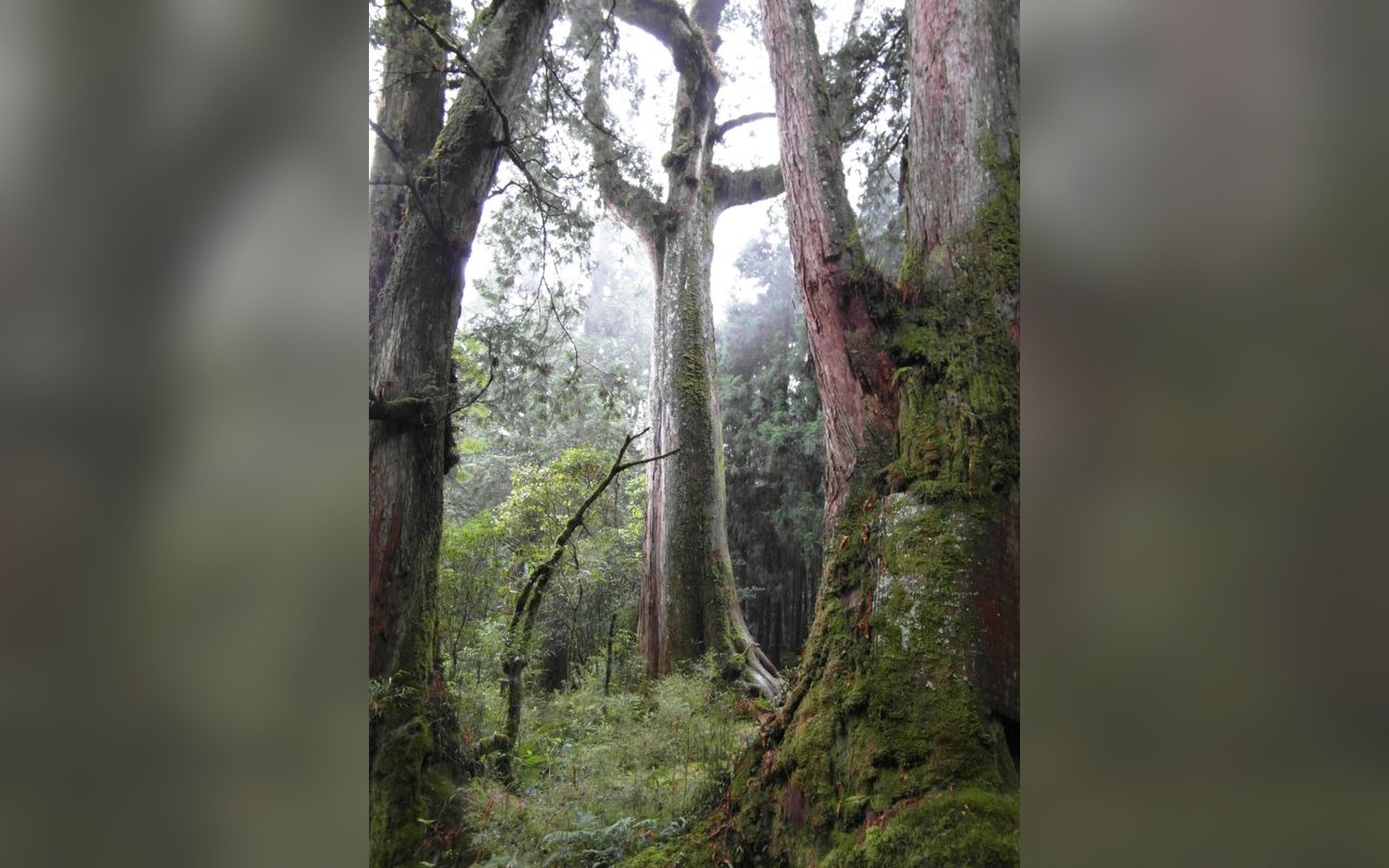
A line built to take timber down
The Alishan Forest Railway and what it was actually for
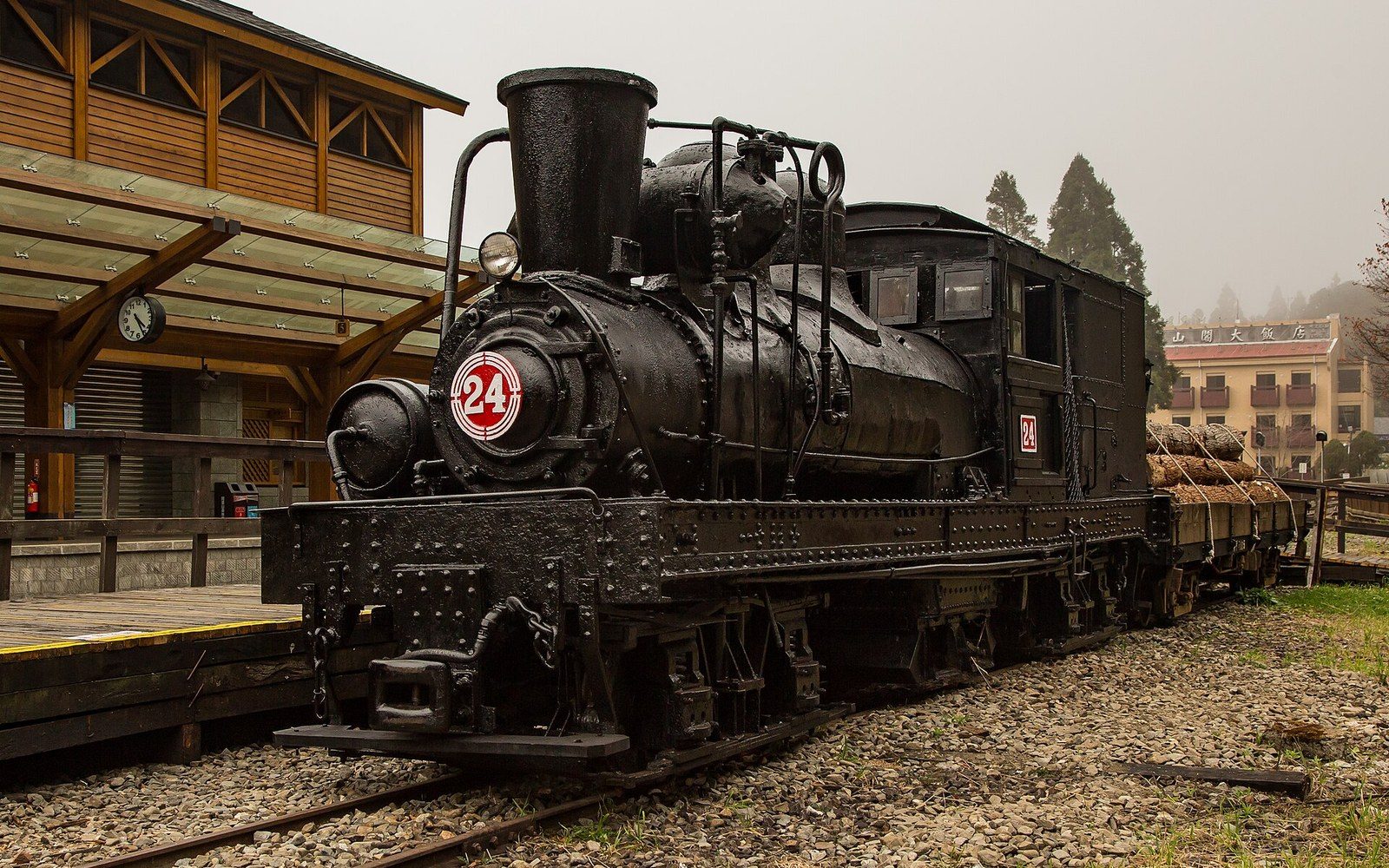
The Alishan Forest Railway did not begin as a scenic attraction. It was an industrial instrument, engineered to extract old-growth timber from one of the most inaccessible mountain ranges in Taiwan, and its architecture — the switchbacks, the spiral loops, the narrow gauge — reflects that original purpose with the clarity of a tool designed for exactly one job.
Construction began in 1906 and the line opened in 1912, during the Japanese colonial administration of Taiwan, under the management of what was then the Taiwan Governor-General's Office. The driving economic logic was the forest itself: cypress and cedar stands of exceptional size occupied the high ridges of Alishan, in what is now Chiayi County, and the lowland timber mills needed a reliable way to move that volume down a gradient that defeated conventional rail. The mountain rises from near sea level at Chiayi city to roughly 2,200 metres at Alishan station, over a line distance of approximately 72 kilometres — a sustained climb that no single-grade railway could manage without engineering concessions.
Switchbacks, spirals and the logic of the gradient
The solution the engineers chose was a combination of switchback sections — where the train reverses direction on a zigzag to gain altitude — and a spiral loop near the upper reaches, where the track curves back over itself to accumulate height within a tight horizontal space. Both devices trade horizontal distance for vertical gain, at the cost of slow progress and mechanical complexity. They were the standard vocabulary of mountain logging railways in the early twentieth century, used wherever a forest sat above a gradient too steep for adhesion traction alone to manage. Rack-and-pinion systems ↗ existed as an alternative, but the Alishan line relied on adhesion throughout, which made the geometry of its switchbacks and spiral critical engineering decisions rather than decorative ones.
The gauge chosen was 762 millimetres — narrow enough to hold construction costs down and to navigate tight curves, which suited both the mountain terrain and the forestry function. Narrow-gauge logging railways were common across the Pacific region in this era, and the Alishan line fits a recognisable pattern: minimal infrastructure cost, maximum penetration into difficult ground, equipment scaled to the load rather than to passenger comfort. The locomotives that worked the line in its early decades were small, powerful and slow, matched to a job measured in tonnes of timber rather than in passenger kilometres.
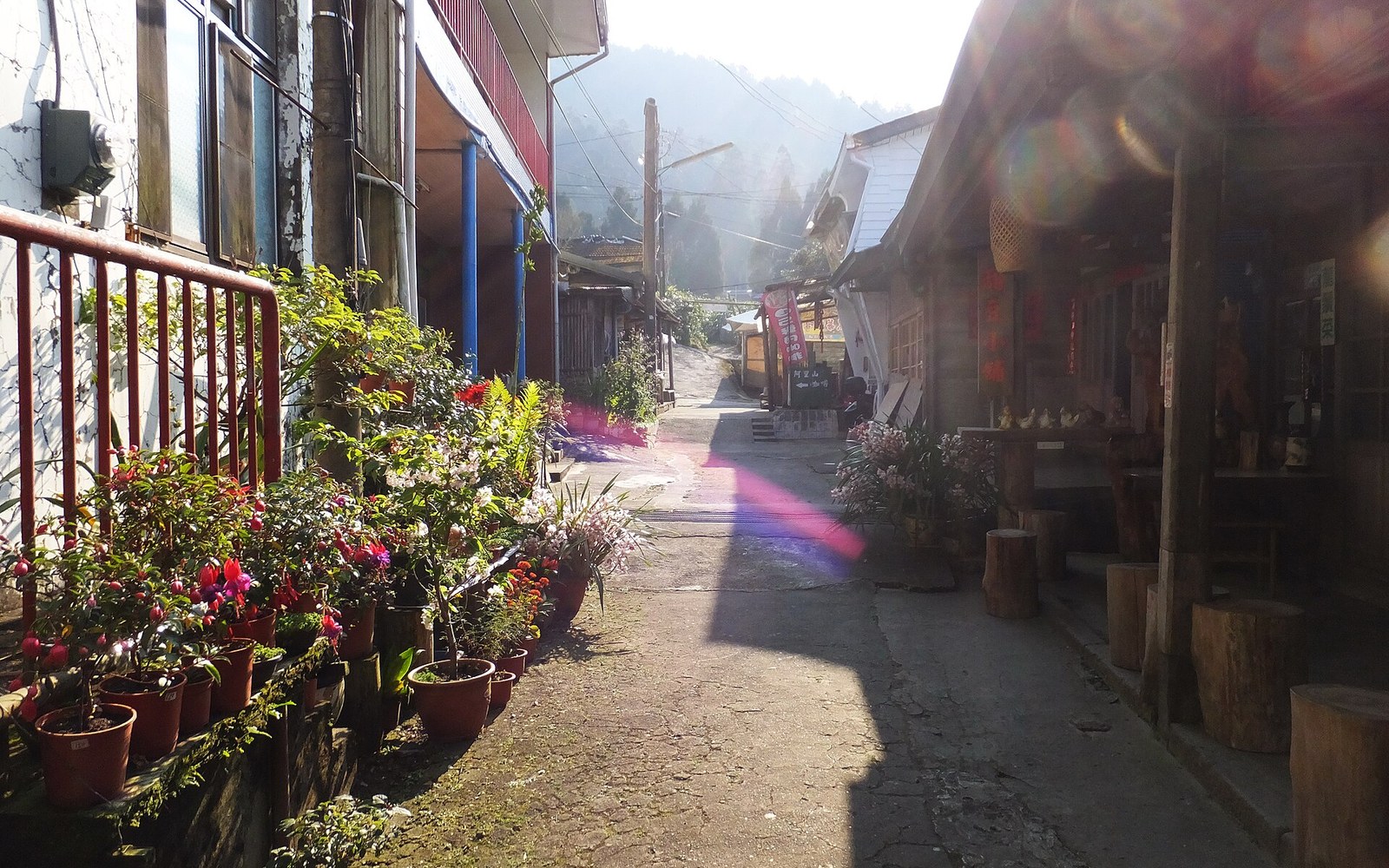
The town of Fenqihu, roughly halfway up the line, developed as a staging and maintenance point during the construction and operational phases — a place where loads could be checked, locomotives serviced, and crews changed. Its position on the gradient made it a natural pause in the journey, and that function outlasted the logging era entirely, leaving a settlement whose layout still reflects the operational logic of the original railway.
What the line moved, and when that changed
For the first several decades of its operation, the Alishan Forest Railway moved timber as its primary cargo. The old-growth cypress and cedar that the line was built to reach — Chamaecyparis formosensis ↗ and related species — were felled at altitude, sent down to Chiayi by rail, and processed for construction timber that supplied markets across the region. Passenger services ran from the early years, but they were secondary to the freight function and served principally the workers, administrators and families connected to the logging operation.
The depletion of accessible old-growth stands, combined with a gradual shift in Taiwan's forestry policy across the mid-twentieth century, reduced and eventually ended commercial logging on the mountain. By the time logging on Alishan was formally curtailed, the railway had already begun its transition toward a different identity. What had been an extraction infrastructure became, progressively, a passenger and tourism service — a transformation that required no changes to the track geometry, since the switchbacks and spiral that were built for heavy timber loads were equally capable of carrying visitors upward through the cloud belt to the high-mountain plateau.
That transition was neither instant nor smooth. The line suffered serious damage from typhoons on multiple occasions — Taiwan's position in the western Pacific makes the mountain railways here persistently vulnerable to storm and landslide — and extended closures for repair punctuated the twentieth and early twenty-first centuries. The Japanese-era infrastructure proved resilient in its core engineering but required sustained maintenance investment to remain operational across terrain where rainfall events can exceed 2,000 millimetres in a single typhoon passage. As of the mid-2020s, the railway operates under the management of the Taiwan Railways Administration, which absorbed the line's management after a series of institutional reorganisations; sections that had been closed for typhoon damage have progressively reopened, though the operational status of specific sections has varied year by year.
What survives, and what it tells you
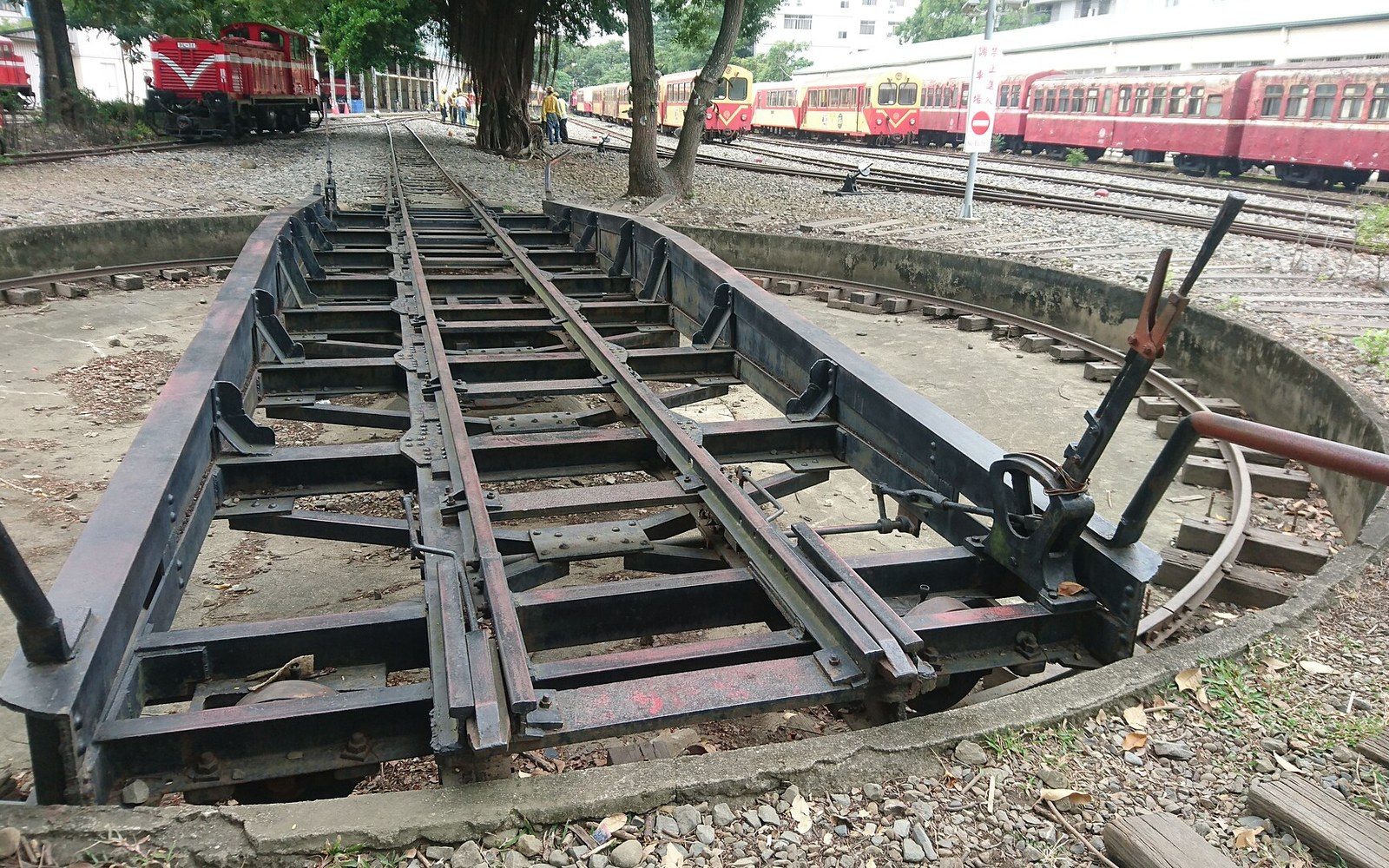
The physical fabric of the Alishan Forest Railway is a document of early-twentieth-century industrial engineering applied to a specific ecological problem. The switchbacks at the lower sections of the line are not charming quirks added later for tourist effect; they are the original solution to a gradient problem that the engineers of 1912 could not otherwise resolve with the materials and motive power available to them. The spiral loop near Alishan station, where the track curves back under itself in a tight arc, performs the same function in horizontal space — it is geometry in the service of tonnage.
The narrow gauge, the tight curves, the modest station structures at Fenqihu and Zhushan: all of these reflect a railway designed to last long enough to extract the forest and no longer. That it has lasted more than a century since it was built, well beyond its original purpose, carrying passengers through the cloud belt rather than timber toward the mills, is partly a function of how well the engineering was executed and partly a function of the mountain's subsequent identity as a place worth reaching. The forest the railway was built to remove is now the reason people ride it — the remaining cedar and cypress stands in the Alishan National Scenic Area are protected precisely because logging stopped, and the train that once carried those trees down now moves through their successors.
That irony is built into the track geometry. A line designed for extraction became the infrastructure for conservation's public face, without anyone changing the rails.